
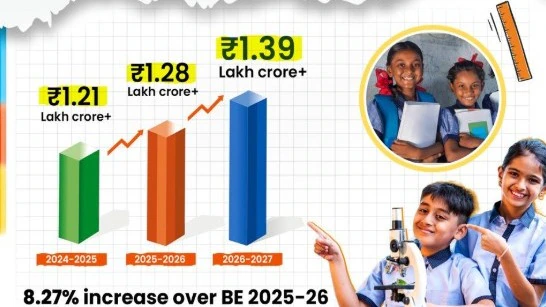
India’s Union Budget 2026 has placed a strong spotlight on education with a major allocation of ₹1.39 lakh crore for education in Budget 2026. This announcement reflects the government’s growing commitment to improving learning infrastructure, strengthening higher education, and expanding opportunities for millions of students across the country. Education has long been seen as a key driver of economic growth, innovation, and social progress, and this significant funding boost signals that policymakers are taking the sector’s future seriously. The ₹1.39 lakh crore for education in Budget 2026 is expected to support multiple reforms, from modernizing classrooms and improving teacher training to promoting digital learning and research development. As India continues to expand its young workforce and compete globally in technology and innovation, the education sector needs consistent investment. By directing substantial resources toward schools and universities, the government aims to create a more inclusive and future ready education system that can benefit students across urban and rural regions alike.

The announcement of ₹1.39 lakh crore for education in Budget 2026 marks one of the largest investments in India’s education sector in recent years. This allocation is designed to strengthen both school education and higher education while accelerating reforms introduced through the National Education Policy. The funding is expected to improve infrastructure, expand digital education initiatives, support teacher training programs, and enhance research capabilities in universities. The goal behind the ₹1.39 lakh crore for education in Budget 2026 is not only to expand access to education but also to improve its quality, ensuring students gain the knowledge and skills required in a rapidly evolving global economy.
Table of Contents
₹1.39 Lakh Crore for Education in Budget 2026
| Key Aspect | Details |
|---|---|
| Total Education Allocation | ₹1.39 Lakh Crore |
| Budget Focus | School Education & Higher Education |
| Policy Framework | National Education Policy Implementation |
| Key Areas of Investment | Infrastructure, Digital Learning, Research, Teacher Training |
| Major Beneficiaries | Students, Teachers, Universities & Research Institutions |
| Technology Initiatives | Smart Classrooms, Online Learning Platforms & Digital Content |
| Long Term Vision | Build A Globally Competitive Education System |
The ₹1.39 lakh crore for education in Budget 2026 represents a significant step toward strengthening India’s education sector. By focusing on school development, university upgrades, digital learning, research innovation, and skill development, the government aims to build a modern and inclusive education system. Education remains one of the most powerful tools for national progress. With consistent investments and effective implementation, the initiatives backed by the ₹1.39 lakh crore for education in Budget 2026 could create lasting improvements in learning quality and accessibility. For millions of students across the country, this funding could open new opportunities for growth, innovation, and career success. As India continues its journey toward becoming a knowledge driven economy, strong investment in education will remain a cornerstone of long term development.
Increased Funding for School Education
- A significant share of the ₹1.39 lakh crore for education in Budget 2026 is expected to go toward improving school education, particularly government schools that serve millions of students across India. For many children in rural and semi urban areas, government schools remain the primary source of formal education. Strengthening these institutions is therefore essential for ensuring equal opportunities.
- Improving school infrastructure is one of the top priorities. Many schools still face challenges such as outdated classrooms, lack of laboratories, and limited learning resources. With the new funding, authorities aim to upgrade facilities, build modern classrooms, and provide better educational materials. Improved infrastructure can help create an environment where students feel motivated to learn and participate actively in academic activities.
- Teacher recruitment and training are also critical components of this effort. Well trained teachers play a major role in shaping students’ learning outcomes. By investing in teacher development programs, the government aims to equip educators with modern teaching techniques and digital tools that can enhance classroom engagement.
- Another important step involves expanding digital learning in schools. Technology driven learning tools, smart classrooms, and online educational resources can help students access better quality content. For students in remote regions, these tools can bridge the gap between rural and urban education systems.
Strengthening Higher Education Institutions
- India’s higher education institutions are another major focus of the ₹1.39 lakh crore for education in Budget 2026. Universities and colleges serve as hubs for research, innovation, and professional development, making them essential for the country’s long term economic growth. The new funding is expected to support improvements in university infrastructure, including modern laboratories, research centers, and campus facilities. Such investments can enhance the academic environment and allow institutions to conduct advanced research across various disciplines.
- Another important aspect is strengthening collaboration between universities and industries. When students gain practical experience through internships, research partnerships, and industry-oriented training programs, they become better prepared for the job market. This type of collaboration also ensures that academic curricula remain aligned with evolving industry requirements. Improving higher education facilities can also attract international students and global partnerships. As Indian universities strengthen their research capabilities and academic programs, they can compete more effectively with global institutions.
Digital Learning and Technology
Digital education has become a major trend in the global learning landscape. The ₹1.39 lakh crore for education in Budget 2026 reflects the government’s recognition of technology as a powerful tool for improving access to education. Expanding internet connectivity in schools and universities is one of the key objectives. Reliable internet access allows students to explore online resources, participate in virtual classrooms, and access high quality educational materials. Technology also enables interactive learning experiences. Educational videos, virtual simulations, and digital presentations can help simplify complex topics and make lessons more engaging for students. These tools can significantly improve students’ understanding of subjects such as science, mathematics, and technology. Online learning platforms are also gaining popularity. Students can access lectures, study materials, and practice tests from anywhere, making education more flexible. Digital platforms can also help teachers manage assignments, track student progress, and deliver personalized learning experiences.
Boost to Research and Innovation
Research and innovation are crucial for any nation that aims to become a global knowledge leader. A portion of the ₹1.39 lakh crore for education in Budget 2026 is expected to strengthen research initiatives in universities and academic institutions. Funding for research grants, scholarships, and innovation programs can encourage students and scholars to pursue advanced studies. When universities receive adequate support for research infrastructure, they can develop new technologies, scientific discoveries, and innovative solutions to real world challenges. Innovation hubs and research centers can also help foster entrepreneurship among students. Many successful startups have emerged from university research projects, and supporting such initiatives can drive economic growth. International collaborations are another important aspect of research development. Partnerships between Indian universities and global institutions allow researchers to share knowledge, resources, and expertise, leading to groundbreaking discoveries.
Supporting Skill Development and Employability
- Modern industries require a workforce equipped with both academic knowledge and practical skills. The ₹1.39 lakh crore for education in Budget 2026 places strong emphasis on skill development programs that prepare students for the demands of the modern job market.
- Vocational education and technical training programs can help students develop specialized skills in fields such as engineering, healthcare, technology, and manufacturing. Courses in emerging sectors like artificial intelligence, data science, and renewable energy are expected to receive increased attention.
- Skill development programs also help bridge the gap between education and employment. When students gain practical experience during their studies, they are better prepared to transition into professional careers.
- For India’s growing youth population, improving employability is essential. By aligning education with industry requirements, these initiatives can help reduce unemployment and create more career opportunities for graduates.
Improving Teacher Training and Education Quality
Teachers form the backbone of any successful education system. The ₹1.39 lakh crore for education in Budget 2026 includes provisions aimed at improving teacher training and professional development across the country. Continuous training programs allow teachers to stay updated with new teaching methodologies, digital tools, and curriculum changes. Educators who receive proper training can deliver lessons more effectively and create a supportive learning environment for students. Professional development programs also encourage teachers to adopt innovative teaching strategies that promote critical thinking and problem-solving skills among students. These skills are essential for success in today’s knowledge driven economy. Improving teacher quality can also reduce regional disparities in education. When teachers across different states receive equal access to training and resources, the overall standard of education improves nationwide.
Long Term Impact on India’s Education System
- The long-term effects of the ₹1.39 lakh crore for education in Budget 2026 could be transformative for India’s academic landscape. Investments in infrastructure, technology, and research will strengthen the foundation of the country’s education system. Better schools and universities can produce a more skilled workforce capable of driving innovation and economic growth. Education also plays a key role in reducing social inequality by providing opportunities for students from diverse backgrounds.
- With improved access to quality learning resources, students across India can pursue their academic goals with greater confidence. Over time, these investments can help India become a global leader in education, research, and innovation. If implemented effectively, the initiatives supported by the ₹1.39 lakh crore for education in Budget 2026 could reshape the future of learning in the country. By empowering students, supporting teachers, and strengthening institutions, India can build an education system that meets the needs of the twenty first century.
Read More:-
Education Loan Finance in India 2026: 7 Big Changes Every Student Must Know Before Taking A Rupee!
FAQs
What is the Total Education Allocation in Budget 2026
The government has allocated ₹1.39 lakh crore for education in Budget 2026, making it one of the largest investments in the sector in recent years.
How Will the Education Budget Benefit Students
Students are expected to benefit through improved school infrastructure, better digital learning resources, stronger universities, and expanded skill development opportunities.
Will Rural Schools Benefit from The New Education Budget
Yes, improving education access in rural and underserved regions is a key objective of the ₹1.39 lakh crore for education in Budget 2026.
How Does the Budget Support Higher Education
The budget supports university infrastructure upgrades, research funding, innovation initiatives, and industry collaboration programs.