
The Bandhan Bank IDBI & Fino Payments Bank shares crash has shaken Dalal Street at a time when banking stocks were expected to remain relatively stable. Investors who once considered these institutions as promising growth opportunities are now questioning their strategies after the Bandhan Bank IDBI & Fino Payments Bank shares crash wiped out a significant portion of market value within days. This sharp fall did not happen in isolation it reflects deeper concerns about the financial health and sustainability of certain banking models in India. In today’s fast-moving stock market, sentiment can change overnight. The Bandhan Bank IDBI & Fino Payments Bank shares crash is a clear reminder that even fundamentally sound-looking stocks can face sudden pressure when negative triggers emerge. For investors, this event highlights the importance of looking beyond short-term gains and understanding the risks hidden beneath growth narratives.
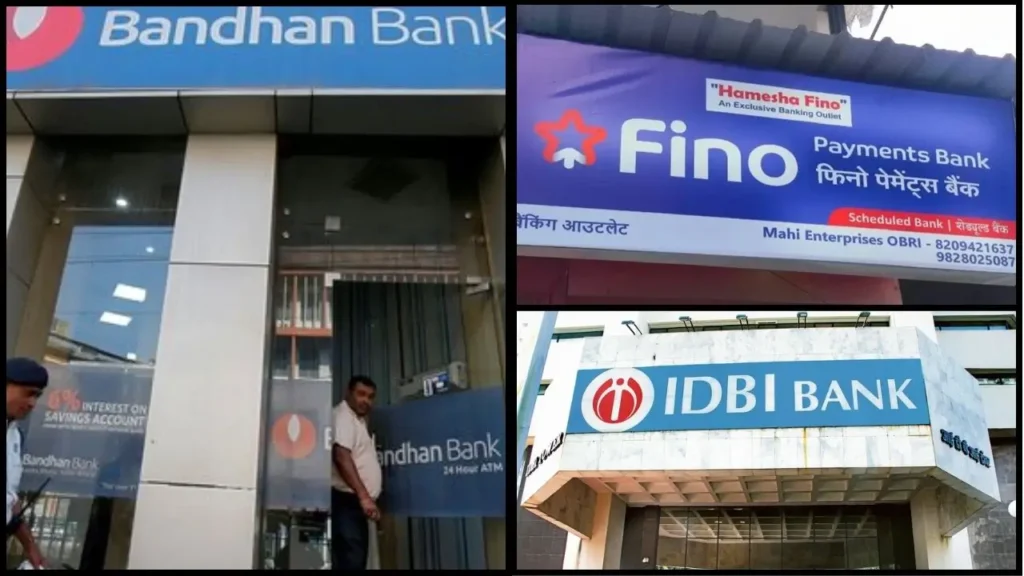
The Bandhan Bank IDBI & Fino Payments Bank shares crash has quickly become one of the most discussed topics among investors and analysts. At its core, this crash was driven by a combination of negative sentiment, concerns raised in a critical report, and broader pressure on the banking sector. The report pointed out potential risks related to asset quality, profitability, and business sustainability. These concerns triggered panic selling, leading to a sharp drop in stock prices. The Bandhan Bank IDBI & Fino Payments Bank shares crash was not just a reaction to one report but a reflection of underlying vulnerabilities that were already present but largely ignored by the market.
Table of Contents
Bandhan Bank IDBI & Fino Payments Bank Shares Crash
| Bank Name & Segment | Key Issue Highlighted & Concern | Market Reaction & Trend | Risk Factor & Impact | Current Outlook & Sentiment |
|---|---|---|---|---|
| Bandhan Bank & Microfinance | Rising NPAs & borrower stress | Sharp decline | Asset quality deterioration | Uncertain & volatile |
| IDBI Bank & PSU Transition | Disinvestment delays & ownership clarity | Moderate to sharp fall | Strategic uncertainty | Cautious & watchful |
| Fino Payments Bank & Fintech | Profitability pressure & limited lending | Significant drop | Business model constraints | Weak & under pressure |
The Bandhan Bank IDBI & Fino Payments Bank shares crash serves as a powerful reminder of the dynamic nature of financial markets. It shows how quickly confidence can erode when concerns about asset quality, regulation, and business models come to the forefront. While the immediate impact has been negative, the long-term outcome will depend on how these banks adapt to changing conditions. For investors, this is a valuable learning moment. Staying informed, focusing on fundamentals, and avoiding panic-driven decisions are key to navigating such situations successfully.
What Did the Shocking Report Reveal?
- The report that triggered the Bandhan Bank IDBI & Fino Payments Bank shares crash highlighted several critical issues that investors could no longer ignore. For Bandhan Bank, the primary concern was its high exposure to microfinance loans. While this segment has driven growth, it also carries a higher risk of defaults, especially during economic stress.
- In the case of IDBI Bank, the focus was on uncertainty surrounding its disinvestment process. Investors prefer clarity, and the lack of a clear timeline or direction created hesitation. This uncertainty contributed significantly to the Bandhan Bank IDBI & Fino Payments Bank shares crash.
- Fino Payments Bank faced scrutiny over its limited revenue model. Since it cannot operate like a full-service bank, its ability to generate consistent profits is restricted. These combined factors created a negative perception, leading to the widespread sell-off.
Why Investors Reacted So Strongly
The intensity of the Bandhan Bank IDBI & Fino Payments Bank shares crash can be largely attributed to investor psychology. Markets often react more strongly to potential risks than to actual outcomes. At the time of the crash, the banking sector was already dealing with concerns such as rising interest rates and tighter regulatory policies. When the negative report surfaced, it acted as a trigger that confirmed existing fears. Another important factor was herd behavior. Once selling began, it quickly spread across similar stocks. Retail investors rushed to exit positions, while institutional investors reduced exposure. This chain reaction significantly amplified the Bandhan Bank IDBI & Fino Payments Bank shares crash.
Asset Quality Concerns Take Center Stage
One of the biggest takeaways from the Bandhan Bank IDBI & Fino Payments Bank shares crash is the renewed focus on asset quality. Non-performing assets are a major indicator of a bank’s financial health, and even a slight increase can impact profitability. Bandhan Bank’s reliance on microfinance lending makes it particularly vulnerable. These loans are typically unsecured and depend heavily on borrower repayment behavior. Any disruption, whether economic or social, can lead to increased defaults. Investors are now paying closer attention to asset quality metrics, making it a central theme in analyzing the Bandhan Bank IDBI & Fino Payments Bank shares crash.
Regulatory Pressure and Policy Risks
Regulatory developments also played a significant role in the Bandhan Bank IDBI & Fino Payments Bank shares crash. The Reserve Bank of India has been tightening norms around lending practices, particularly in unsecured segments. These changes can increase compliance requirements and reduce profitability. Smaller banks and payment banks are especially affected because they operate on thinner margins. Fino Payments Bank, for example, faces structural limitations due to its licensing framework. This makes it more sensitive to regulatory changes, adding another layer of concern during the Bandhan Bank IDBI & Fino Payments Bank shares crash.
Business Model Challenges
- The Bandhan Bank IDBI & Fino Payments Bank shares crash has also brought attention to the underlying business models of these institutions.
- Fino Payments Bank relies heavily on transaction-based income. While digital payments are growing, competition in this space is intense, making it difficult to maintain high margins.
- Bandhan Bank’s dependence on microfinance requires diversification to reduce risk. Without expanding into other lending segments, the bank may continue to face volatility.
- IDBI Bank, meanwhile, is still in transition. Until there is clarity on ownership and long-term strategy, investor confidence is likely to remain low. These structural issues were key contributors to the Bandhan Bank IDBI & Fino Payments Bank shares crash.
Market Sentiment And The Road Ahead
- The Bandhan Bank IDBI & Fino Payments Bank shares crash highlights how quickly market sentiment can shift. Even a single negative report can trigger widespread panic if the environment is already uncertain.
- Looking ahead, recovery will depend on how these banks address the concerns raised. Transparency, improved financial performance, and clear strategic direction will be crucial.
- If these institutions can demonstrate stability and growth, there is potential for recovery. However, rebuilding investor trust after the Bandhan Bank IDBI & Fino Payments Bank shares crash will take time.
Should Investors Be Worried?
The Bandhan Bank IDBI & Fino Payments Bank shares crash raises important questions, but it does not necessarily signal long-term failure. Investors need to differentiate between short-term market reactions and long-term fundamentals. While the crash highlights real risks, it also presents opportunities for those willing to analyze the situation carefully. A balanced approach is essential. Diversification, risk management, and continuous monitoring can help investors navigate the uncertainty surrounding the Bandhan Bank IDBI & Fino Payments Bank shares crash.
Read More:-
FAQs
1. What caused the Bandhan Bank IDBI & Fino Payments Bank shares crash?
The crash was mainly triggered by a report highlighting concerns about asset quality, profitability, and regulatory risks in these banks.
2. Is this crash a temporary market reaction?
It is partly driven by sentiment, but the underlying issues highlighted in the report need to be monitored closely.
3. Why is asset quality important in this crash?
Asset quality determines a bank’s ability to recover loans. Poor asset quality increases financial risk and reduces profitability.
4. How do regulations affect these banks?
Stricter regulations can limit lending practices and increase compliance costs, impacting profitability and growth.