

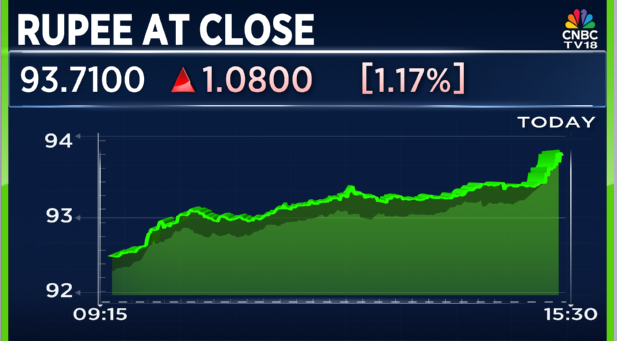
The Rupee crashes past 93 per dollar moment is not just another financial milestone it’s a clear signal that something deeper is shifting in the global and Indian economy. Over the past few weeks, the Rupee crashes past 93 per dollar headline has sparked concern among economists, investors, and even ordinary households trying to make sense of rising costs. Currency movements don’t happen in isolation; they reflect a mix of global tensions, investor sentiment, and domestic vulnerabilities that are all colliding at once. What makes this situation more serious is how quietly it is unfolding. There is no sudden crash or panic, yet the effects are slowly creeping into everyday life. From fuel prices inching upward to imported goods becoming more expensive, the impact is real and growing. The connection between a distant geopolitical conflict and your daily expenses may not seem obvious at first, but it is very much there and it’s shaping the direction of India’s economy right now.

The phrase Rupee crashes past 93 per dollar reflects more than just currency depreciation it captures the combined pressure of global uncertainty and India’s economic structure. The ongoing Iran conflict has triggered instability in the Middle East, a region critical to global oil supply. As tensions rise, oil prices climb, and countries like India, which depend heavily on imports, feel the strain almost immediately. At the same time, global investors are becoming cautious. During uncertain times, they tend to move their money into safer assets like the US dollar. This strengthens the dollar while weakening currencies such as the rupee. The result is a cycle where rising import costs and capital outflows reinforce each other, making the situation harder to control in the short term.
Table of Contents
Rupee Crashes Past 93/$ for the First Time
| Key Factor | Details |
|---|
| Exchange Rate | Rupee crosses 93 per US dollar for the first time |
| Primary Trigger | Escalating Iran conflict and Middle East instability |
| Oil Price Impact | Rising crude oil prices increasing India’s import bill |
| Capital Flows | Foreign investors shifting funds to safer assets like US dollar |
| Inflation Pressure | Higher import costs leading to rising domestic prices |
| Government Response | RBI monitoring and possible forex intervention |
| Economic Risk | Trade deficit widening, growth concerns |
The Rupee crashes past 93 per dollar milestone is more than just a number it’s a reflection of how interconnected today’s world has become. A conflict in the Middle East can influence currency values, inflation, and economic growth in India in ways that are both direct and subtle. For policymakers, the challenge lies in managing short-term pressures while building long-term stability. For individuals, understanding these changes can help make better financial decisions in uncertain times. While the situation may improve if global conditions stabilize, it also serves as a reminder that economic resilience is not just about reacting to crises, but preparing for them well in advance.
Why the Rupee Is Falling So Rapidly
The Rupee crashes past 93 per dollar trend is not driven by a single factor. It’s the result of multiple pressures building up at the same time. One of the biggest contributors is the sharp rise in global crude oil prices. Since India imports a large portion of its oil, even a small increase in prices translates into a significant increase in demand for dollars. Another important factor is the strength of the US dollar. In times of global uncertainty, investors look for stability, and the dollar is often seen as a safe haven. As demand for the dollar increases, other currencies weaken, including the rupee. There’s also the issue of foreign investment outflows. When investors pull money out of Indian markets, they convert rupees into dollars, which increases demand for the dollar and pushes the rupee down further. This creates a feedback loop that accelerates depreciation.
How the Iran Conflict Is Driving Economic Pressure
- The Rupee crashes past 93 per dollar situation is closely linked to the tensions surrounding Iran. While India is not directly involved, the global impact of the conflict is significant. The Middle East plays a central role in global energy supply, and any disruption in this region affects oil prices worldwide.
- As oil prices rise, India’s import costs increase. This puts pressure on the country’s trade balance and leads to higher inflation. Businesses that rely on fuel or transportation face higher expenses, which are eventually passed on to consumers.
- Geopolitical uncertainty also affects investor confidence. When risks increase, investors prefer to move their money to safer markets. This leads to capital outflows from emerging economies like India, weakening the rupee even further.
Impact on Inflation and Everyday Life
When the Rupee crashes past 93 per dollar, the impact is not limited to financial markets it directly affects everyday life. A weaker currency makes imports more expensive, and this cost is eventually passed on to consumers. Fuel prices are often the first to rise. As petrol and diesel become more expensive, transportation costs increase. This affects the price of goods across the board, from vegetables to manufactured products. For households, this means higher monthly expenses. Grocery bills go up, travel becomes more expensive and imported goods such as electronics or appliances cost more. Over time, this reduces purchasing power and puts pressure on household budgets.
Pressure on Trade Deficit and Growth
The Rupee crashes past 93 per dollar milestone also highlights concerns about India’s trade deficit. When imports become more expensive, the gap between imports and exports widens. While a weaker rupee can make exports more competitive, the benefit is often limited when global demand is uncertain. At the same time, the rising cost of imports especially oil has a much larger impact. This imbalance can slow down economic growth. Businesses face higher input costs, consumers cut back on spending, and investment activity declines. All of this creates a challenging environment for sustained growth.
What the RBI and Government Can Do
- In response to the Rupee crashes past 93 per dollar trend, the Reserve Bank of India has several options. One of the most direct methods is intervening in the foreign exchange market by selling dollars to support the rupee.
- Interest rate adjustments are another tool. By increasing interest rates, the RBI can attract foreign investment, which can help stabilize the currency. However, this approach comes with trade-offs, as higher interest rates can slow down economic activity.
- The government can focus on long-term measures such as reducing dependence on imported energy and encouraging domestic production. Diversifying energy sources and strengthening local industries can help reduce vulnerability to global shocks.
Is This a Temporary Shock or a Long Term Concern
- The Rupee crashes past 93 per dollar event may turn out to be temporary if geopolitical tensions ease and oil prices stabilize. In such a scenario, investor confidence could return, and the rupee might recover.
- However, there are deeper structural issues to consider. India’s reliance on imported oil and foreign capital makes it sensitive to global disruptions. Without addressing these underlying challenges, similar situations could occur again in the future.
- The long-term outlook will depend on how effectively India can strengthen its economic resilience while navigating global uncertainties.
Read More:-
Bajaj Finance Falls Sharply—Should You Buy the Dip or Stay Away from This Stock?
FAQs
1. Why did the rupee crash past 93 per dollar
The rupee weakened due to rising oil prices, global uncertainty from the Iran conflict, and investors shifting funds to safer assets like the US dollar.
2. How does a weak rupee affect daily life
A weaker rupee increases the cost of imports, leading to higher fuel prices, expensive goods, and overall inflation.
3. Can the rupee recover from this level
Yes, recovery is possible if global tensions ease and oil prices stabilize, but it depends on multiple economic factors.
4. What steps can the RBI take to stabilize the rupee
The RBI can intervene in forex markets, adjust interest rates, and manage liquidity to control volatility.