
The Bihar Public Service Commission (BPSC) has officially announced an extension for the registration period of the BPSC 33rd Bihar Judicial Services Examination 2026. Following a landmark directive from the Supreme Court of India regarding eligibility mandates, the commission has moved the final application deadline to April 30, 2026. This extension provides a vital window for law graduates across the country to vie for one of the 173 Civil Judge (Junior Division) vacancies, ensuring that the recruitment process remains inclusive and legally sound.
Table of Contents
BPSC 33rd Judicial Services 2026
| Feature | Details |
| Notification Number | 12/2026 |
| Total Vacancies | 173 (Civil Judge, Junior Division) |
| New Registration Deadline | April 30, 2026 |
| Preliminary Exam Date | May 30, 2026 (Tentative) |
| Core Eligibility | LLB Degree + 3 Years Bar Experience |
| Official Portal | onlinebpsc.bihar.gov.in |
Supreme Court Intervention Triggers Deadline Extension
The shift in the recruitment timeline for the BPSC 33rd Bihar Judicial Services Examination follows extensive legal proceedings regarding the mandatory three-year professional experience requirement. Historically, Bihar had oscillating requirements for experience; however, recent judicial clarifications necessitated a standardized window for all eligible practitioners to submit their credentials.
According to official notification No. 12/2026, the Bihar Public Service Commission (BPSC) adjusted the schedule to ensure that candidates who were previously sidelined by administrative ambiguities now have sufficient time to complete their “One Time Registration” (OTR). Originally, the portal was set to close in mid-March, but the revised schedule now allows for fee payments and form submissions through the end of April.
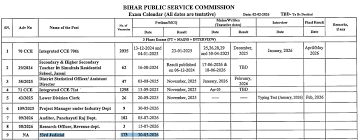
Navigating the 173 Vacancies: A Categorical Breakdown
Understanding the seat matrix is essential for candidates to assess their competitive standing. The 173 seats are distributed according to the Bihar state reservation policy, which has seen recent updates in vertical and horizontal quotas.
- Unreserved (General): 69 Posts
- Economically Weaker Sections (EWS): 17 Posts
- Scheduled Caste (SC): 28 Posts
- Scheduled Tribe (ST): 02 Posts
- Extremely Backward Class (EBC): 34 Posts
- Backward Class (BC): 23 Posts
Furthermore, 35% of these seats are horizontally reserved for women across all categories, making this one of the most significant opportunities for female law graduates in the region.
Eligibility and Mandatory Requirements for 2026
Prospective candidates must navigate a strict set of eligibility parameters. The BPSC has emphasized that while the deadline has moved, the “cut-off date” for determining age and experience remains anchored to the original terms of the advertisement.
Academic and Professional Qualifications
Candidates must hold a Bachelor of Laws (LLB) degree from a university recognized by the Bar Council of India (BCI). The most critical hurdle for the 33rd cycle is the 3-year practice requirement. Applicants must demonstrate active practice at the Bar as of February 23, 2026. This requires a certificate issued by the respective District Judge or the Secretary of the Bar Association.
Age Limit and Categorical Relaxations
As of August 1, 2025, the age requirements are as follows:
- Minimum Age: 22 years.
- Maximum Age (General Male): 35 years.
- Maximum Age (Reserved/Female): 40 years.
The “New Law” Paradigm: Syllabus Shift
The 2026 examination is a historic milestone for the Bihar Judiciary as it marks the full-scale implementation of the new criminal laws. The BPSC 33rd Bihar Judicial Services Examination will transition away from the Indian Penal Code (IPC), the Code of Criminal Procedure (CrPC), and the Indian Evidence Act.
Instead, candidates will be tested on:
- Bharatiya Nyaya Sanhita (BNS): Focusing on substantive crimes and the shift in definitions of organized crime and terrorism.
- Bharatiya Nagarik Suraksha Sanhita (BNSS): Covering procedural shifts, including the mandatory use of forensics and electronic evidence.
- Bharatiya Sakshya Adhiniyam (BSA): Dealing with the modern rules of evidence in a digital age.
“The inclusion of BNS, BNSS, and BSA is not just a change of names; it is a change of legal philosophy,” notes Dr. Amitesh Pandey, a senior legal consultant. “Candidates who rely solely on old notes for the Code of Criminal Procedure will find themselves at a severe disadvantage.”
Detailed Selection Process: The Three Pillars
Success in the Bihar Judicial Services requires mastery over three distinct phases, each designed to test different facets of a candidate’s legal acumen.
Phase I: The Preliminary Examination
This is a screening test consisting of two papers.
- Paper 1 (General Studies): 100 Marks. Focuses on current affairs, history of India, and physical geography.
- Paper 2 (Law): 150 Marks. Covers Constitutional Law, Law of Evidence, Civil Procedure (CPC), and the new Criminal Laws.
Phase II: The Mains Examination
The Mains consists of five mandatory papers and three optional papers chosen from a list of five.
- Mandatory Papers: General Knowledge, Elementary General Science, General English, General Hindi, and the Law of Evidence and Procedure.
- Optional Subjects: Candidates often choose between Hindu & Muslim Law, Law of Transfer of Property, Principle of Equity, Law of Contracts, and Commercial Law.
Phase III: The Viva-Voce (Interview)
Candidates who clear the Mains are called for a 100-mark interview. The minimum qualifying mark in the interview is 35%. This stage tests the candidate’s personality, presence of mind, and practical understanding of legal application.
Strategic Preparation: Expert Advice for the Extended Timeline
With the extension until April 30 and the Preliminary exam scheduled for late May, candidates have a compressed window for revision. Experts suggest a “Integrated-cum-Focused” approach.
- Comparative Study: Create tables comparing the IPC/CrPC sections with their BNS/BNSS counterparts. Understanding the “re-numbering” is half the battle for the Prelims.
- Focus on General Science: Bihar’s judiciary exams are unique for their emphasis on Elementary General Science. This paper often acts as the “deal-breaker” in the Mains.
- Language Proficiency: Since General English and General Hindi are qualifying papers, do not ignore them. A failure to score the minimum 30% here will disqualify the most brilliant legal papers.
- Mock Tests: Given the high competition, taking at least two full-length mock tests per week during the month of May is highly recommended.
Administrative Hurdles: Avoiding Rejection
The BPSC portal is technically sensitive. Candidates are advised to:
- Ensure the Aadhaar number is linked to their mobile for OTP verification.
- Keep the 3-year experience certificate in a PDF format under 200KB.
- Double-check the “Category” column, as Bihar-specific reservation benefits are only available to permanent residents of the state.
The Road Ahead for Bihar’s Judiciary
The recruitment of 173 new judges comes at a time when the Indian judicial system is grappling with a massive backlog of cases. By expanding the deadline and ensuring a wider pool of applicants, the Bihar Public Service Commission aims to bring in high-caliber legal minds capable of handling the complexities of modern Indian law.
While the extension is a breather, the countdown to May 30 has begun. Candidates are urged to finalize their applications early to avoid the anticipated heavy traffic on the BPSC website during the final week of April.
Conclusion
The extension of the BPSC 33rd Bihar Judicial Services Examination deadline represents a significant procedural shift aimed at maintaining fairness in the recruitment process. Eligible law graduates now have until April 30, 2026, to finalize their applications. As the judiciary seeks to fill 173 vacancies, the focus now shifts to the rigorous three-stage selection process and the mastery of the new legislative framework governing the nation.