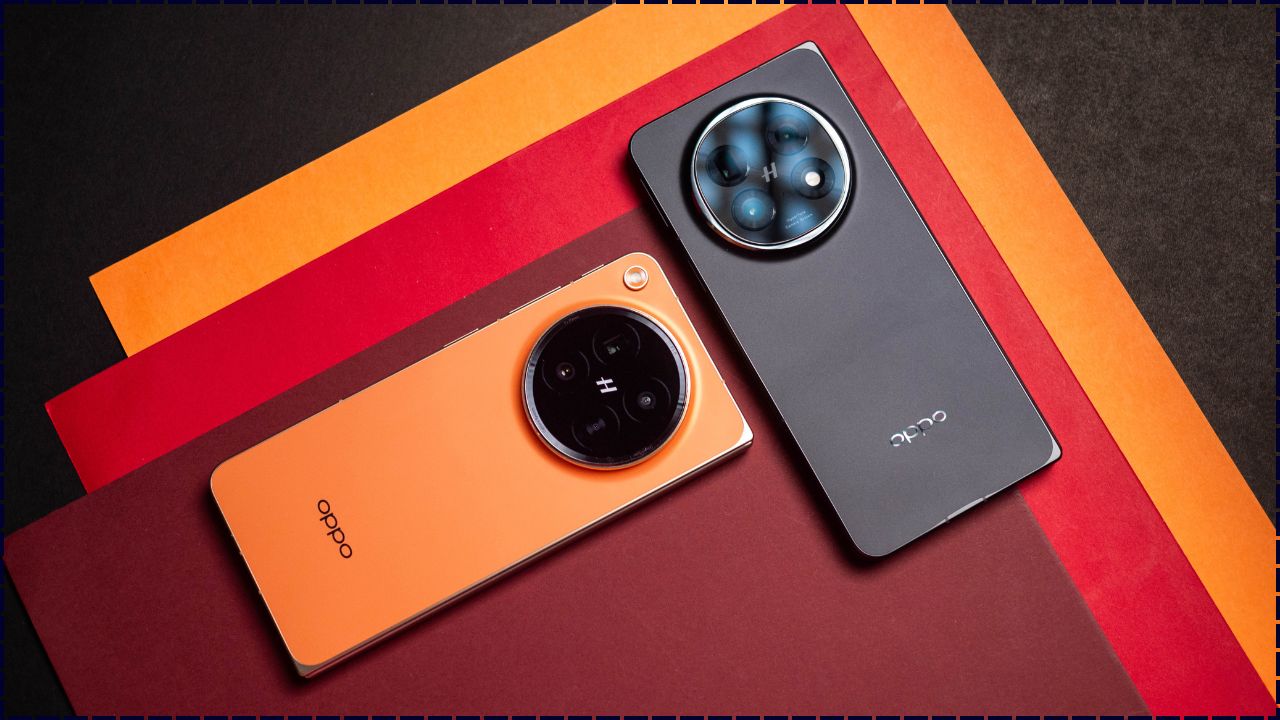


In an industry often accused of incrementalism, OnePlus has delivered a definitive disruption. On March 24, 2026, the company officially unveiled the OnePlus 15T, a device dubbed the “performance monster” by industry analysts. By integrating the world’s first Snapdragon 8 Elite Gen 5 processor with a staggering 7,500mAh “Glacier” battery, the 15T represents a paradigm shift in mobile engineering, prioritizing raw power and endurance over the traditional “thin-at-all-costs” philosophy.
Table of Contents
OnePlus 15T
| Feature Category | Technical Specification | Industry Context |
| Processing Power | Snapdragon 8 Elite Gen 5 (3nm) | First to market with 4.4M AnTuTu score |
| Energy Density | 7,500mAh Silicon-Carbon Anode | 22% more capacity than standard Li-Ion |
| Thermal Management | 12,000mm² Dual-VC Cooling | Largest cooling area in a non-gaming phone |
| Display Tech | 1.5K LTPO 165Hz AMOLED | Custom BOE X2 panel with 4,500 nits peak |
The Architecture of Speed: Snapdragon 8 Elite Gen 5
At the core of the OnePlus 15T lies the Snapdragon 8 Elite Gen 5, a chipset that marks Qualcomm’s transition to a fully proprietary Oryon CPU architecture across all cores. Unlike previous generations that balanced “performance” and “efficiency” cores, the Gen 5 utilizes an “All-Big-Core” design.
According to Dr. Raymond Yeung, a senior semiconductor analyst at Counterpoint Research, “The move to the Elite Gen 5 allows for a 40% improvement in IPC (Instructions Per Clock) compared to the previous year. OnePlus is the first to harness this by pairing it with a dedicated ‘Wind Chaser’ gaming kernel.” This software layer allows the OS to bypass standard Android background limitations, dedicating 90% of the chip’s power to the active application during “Monster Mode” sessions.
The “Triple-Core” Ecosystem
OnePlus has moved beyond the single-chip approach. The 15T utilizes a distributed processing model:
- The Primary SoC: The Snapdragon 8 Elite Gen 5 handles general logic and high-end graphics.
- The Lingxi Touch Chip: A custom-developed co-processor that handles display touch sampling at 2,000Hz, ensuring that in competitive gaming, the delay between a finger tap and an on-screen action is virtually non-existent.
- The G2 Graphics Co-processor: This chip uses AI Frame Interpolation to take a native 60fps game and upscale it to 165fps, reducing the load on the main processor and lowering temperatures.
The Battery Breakthrough: 7,500mAh and the “Glacier” Tech
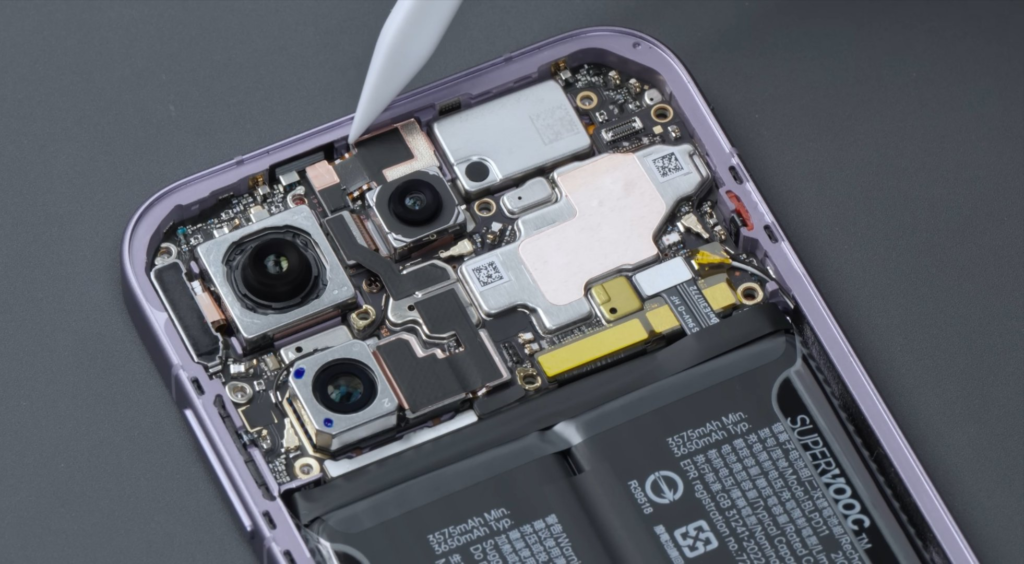
The headline-grabbing 7,500mAh battery is not merely a larger version of what came before. It utilizes Silicon-Carbon (Si-C) anode technology, a shift from traditional graphite anodes.
OnePlus engineers collaborated with Ningde Amperex Technology Limited (ATL) to develop the “Glacier” battery. Silicon anodes can hold up to ten times the lithium ions of graphite by weight. However, silicon typically expands and contracts during charging, leading to battery degradation. The Glacier technology solves this through a porous carbon “scaffold” that contains the silicon, allowing it to expand without damaging the battery’s structure.
Why 7,500mAh Matters in 2026
In an era of 5.5G connectivity and AI-heavy processing, energy consumption has spiked. A standard 5,000mAh battery, once the gold standard, often struggles to last a full day under heavy AI usage. The 15T’s 7,500mAh capacity ensures that even with the Snapdragon 8 Elite Gen 5 running at maximum clock speeds, users can expect two full days of “typical” use or 10 hours of continuous high-end gaming.
“We are seeing the end of ‘battery anxiety’ as a marketing term and its emergence as a solved engineering problem,” noted Sarah Chen, Lead Hardware Reviewer at The Verge. “The fact that OnePlus fit this into a 194g chassis is the real achievement.”
Thermal Dynamics: Keeping the “Monster” Cool
High performance generates high heat. To prevent the Snapdragon 8 Elite Gen 5 from throttling, OnePlus implemented a 12,000mm² Dual-VC (Vapor Chamber) cooling system. This system uses aerospace-grade “superconducting heat graphite” and a “Laval nozzle” design to accelerate internal steam flow.
The 15T also introduces Bypass Charging. For power users, this is a critical inclusion. When the phone is plugged in during a gaming session, the energy goes directly to the processor and screen, skipping the battery entirely. This prevents the “double-heating” effect where the battery generates heat while charging at the same time the processor generates heat while running the game.
A Compact Flagship with “Pro” Durability
While the internals are aggressive, the exterior of the OnePlus 15T leans toward a refined, minimalist aesthetic. It features a 6.32-inch display, making it significantly more pocketable than the 6.8-inch “Ultra” phones from competitors.
Ruggedization for the Modern User
OnePlus has secured an unprecedented quadruple certification for the 15T:
- IP66: Protection against high-pressure water jets.
- IP68: Immersion in water up to 1.5 meters for 30 minutes.
- IP69/IP69K: Resistance to high-pressure, high-temperature steam cleaning and “close-range high-pressure water.”
This level of sealing is typically reserved for specialized industrial tablets, but here it is integrated into a device with 1.1mm ultra-slim bezels.
Strategic Market Context: The “Flagship Killer” Returns?
The launch of the OnePlus 15T comes at a time when flagship prices from Apple and Samsung have stabilized above the $1,100 mark. By pricing the 15T at approximately $580 (4,199 Yuan) in China, OnePlus is returning to its roots as a “Flagship Killer.”
Market Analysis Table: The 2026 Flagship Landscape
| Device | Starting Price (Est.) | Battery | Chipset |
| OnePlus 15T | $580 – $650 | 7,500mAh | Snapdragon 8 Elite Gen 5 |
| Samsung Galaxy S26 | $899 | 4,200mAh | Snapdragon 8 Elite Gen 5 |
| iPhone 17 Pro | $1,099 | 4,100mAh | Apple A19 Pro |
| Xiaomi 16T | $620 | 6,500mAh | MediaTek Dimensity 9500 |
Analysts at IDC suggest that the 15T’s focus on battery life and gaming performance will likely siphon market share from both the “gaming phone” niche (like the ASUS ROG Phone series) and the standard flagship tier.
The Global Outlook
While the March 24 event focused on the Chinese market, sources close to the supply chain indicate that a global version—likely branded as the OnePlus 15s or simply the OnePlus 15T International Edition—will debut in London and New York in mid-May 2026.
The international variant is rumored to include a slightly modified camera software suite to cater to Western preferences for “natural” color science, though the core Snapdragon 8 Elite Gen 5 and 7,500mAh battery specs will remain identical.
Conclusion
The OnePlus 15T represents a bold gamble: that consumers in 2026 value sustained power and battery longevity over gimmicky AI software features. By leveraging the Snapdragon 8 Elite Gen 5 and pioneering Silicon-Carbon battery tech, OnePlus has created a device that is, for the first time in years, truly “new” under the hood.
Whether the 15T can maintain its “performance monster” status against the upcoming fall releases remains to be seen, but for now, the bar for the 2026 flagship has been set significantly higher.
FAQ
How does the 165Hz display affect battery life?
The LTPO technology allows the screen to drop to 1Hz when viewing static content, meaning the 165Hz mode only engages when the content (like a game or fast scroll) actually benefits from it, preserving the 7,500mAh capacity.
Is the Snapdragon 8 Elite Gen 5 prone to overheating?
Thanks to the 3nm process and the 12,000mm² cooling system in the 15T, early tests show the chip runs 5°C cooler than the Gen 4 under identical loads.