
Studying abroad has become a major aspiration for thousands of Indian students. Every year, families invest significant savings to send their children to universities in countries like the United States, Canada, the United Kingdom, and Australia. However, the process of transferring large amounts of money overseas has not always been easy. A major challenge in recent years has been the tax collected on foreign remittances for education. The latest announcement that TCS on foreign education has therefore come as a huge relief. With TCS on foreign education slashed, students and parents can now send tuition fees abroad without facing the same level of financial pressure that existed earlier. For families who regularly transfer funds for tuition fees, accommodation, and other study-related expenses, the earlier tax structure created a temporary financial burden. Although the collected tax could be adjusted while filing income tax returns, the immediate cost of sending money abroad was often stressful. Now that TCS on foreign education, the government has made international education payments more manageable. This change is expected to help thousands of students who plan to pursue higher education abroad in the coming years.

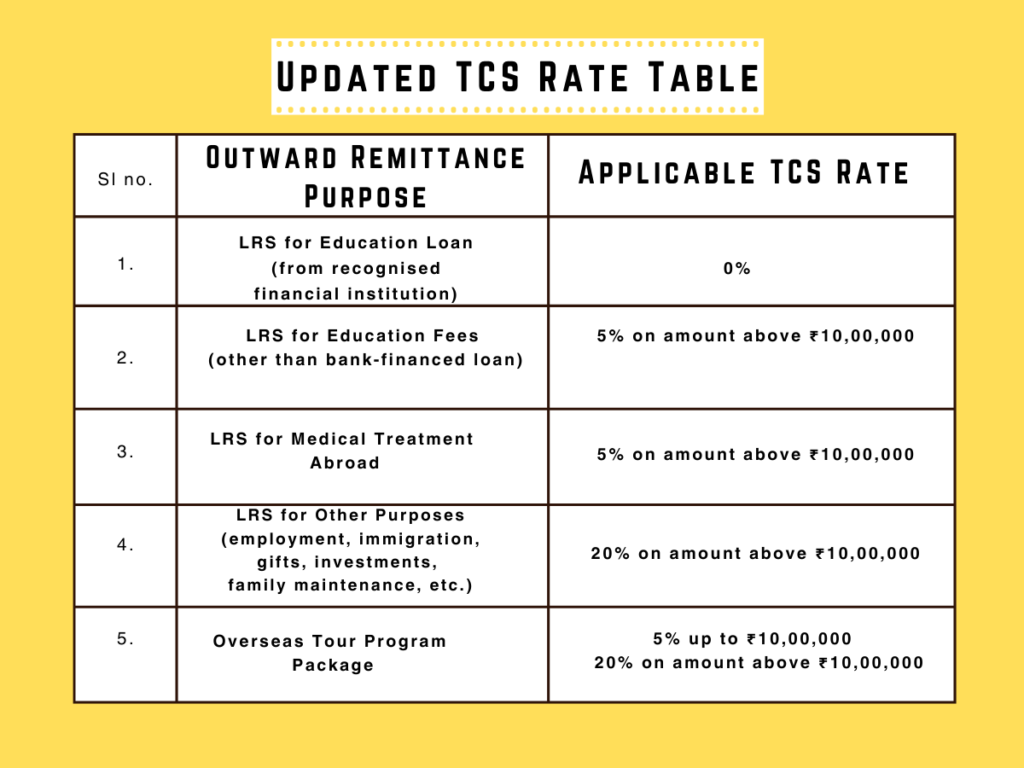
The policy change where TCS on foreign education slashed directly impacts how Indian families transfer money overseas for academic purposes. Under the Liberalised Remittance Scheme, individuals can send money abroad for several purposes, including education. Previously, when large amounts were transferred for tuition fees or other education expenses, banks collected tax at source during the transaction. This created a situation where families had to arrange additional funds on top of the tuition amount. Although the tax could be claimed later as credit, it still blocked a portion of money temporarily. With the new policy where TCS on foreign education slashed, that burden has been reduced. Families now need to arrange less extra money while transferring funds abroad. This change improves financial flexibility and allows students to focus more on their studies rather than worrying about complicated tax rules.
Table of Contents
TCS on Foreign Education
| Key Information | Details |
|---|---|
| Policy Update | TCS On Foreign Education Slashed |
| Applicable Scheme | Liberalised Remittance Scheme |
| Purpose | Overseas education payments |
| Who Benefits | Indian students & parents sending money abroad |
| Previous Issue | Higher upfront tax during remittances |
| New Benefit | Lower financial burden on tuition transfers |
| Tax Adjustment | Tax credit still claimable during income tax filing |
| Common Destinations | USA & UK & Canada & Australia |
The decision that TCS on foreign education slashed is a major step toward making international education more accessible for Indian students. Studying abroad already involves significant financial commitments, and reducing the tax burden on overseas transfers helps families manage these expenses more comfortably. By lowering the upfront tax requirement, the government has made it easier for parents to transfer tuition fees and living expenses to universities abroad. This policy change improves cash flow for families and reduces the stress associated with large financial transactions. As the number of Indian students pursuing global education continues to rise, supportive policies like this will play an important role in shaping their academic journeys. With careful planning and the benefit of the new rule, students can now focus more on achieving their educational goals rather than worrying about complicated financial procedures.
Understanding TCS Under the Liberalised Remittance Scheme
- Tax Collected at Source is a system used by the government to monitor international financial transactions. When individuals send money abroad through banks, a small portion of tax is collected during the transfer. This rule falls under the Liberalised Remittance Scheme, which allows Indian residents to remit money overseas for approved purposes.
- Education is one of the most common reasons for foreign remittances. Parents often transfer large amounts to universities abroad to cover tuition fees, accommodation, insurance, and other academic expenses. When the transfer is made, banks collect the applicable tax and report it to the government.
- The collected tax is not lost money. It appears in the taxpayer’s records and can be adjusted against their total tax liability during income tax filing. However, the challenge for families was the immediate payment requirement. This is why the decision where TCS on foreign education slashed is so important for students planning to study abroad.
Why The TCS Rule Was a Concern for Students
- International education is expensive. Tuition fees alone can range from several lakhs to more than forty lakh rupees annually depending on the course and country. On top of that, students must pay for accommodation, food, transportation, and health insurance.
- When additional tax had to be paid during fund transfers, it increased the amount parents needed to arrange at once. For example, if a family needed to send twenty lakh rupees for tuition fees, they had to arrange extra money for the tax component during the transaction.
- Even though the tax amount could later be claimed back while filing returns, the temporary financial burden was difficult for many families. The announcement that TCS on foreign education slashed has therefore reduced this pressure significantly. Families now have more flexibility when planning education expenses abroad.
Key Changes in the New Rule
- The updated rule focuses on making education remittances easier and less financially stressful. By reducing the tax collected at the time of transfer, the government has acknowledged the increasing number of Indian students studying abroad.
- Important aspects of the new rule include reduced tax collection on education-related remittances and improved liquidity for families making large international transfers. Parents no longer need to arrange large additional funds while sending tuition fees. The policy also continues to allow taxpayers to claim tax credits when filing their returns.
- Because TCS on foreign education slashed, the financial planning process for international education becomes smoother and more predictable.
Impact on Tuition Fee Payments
One of the biggest advantages of the new policy is its direct impact on tuition fee transfers. Universities abroad usually require large payments at the start of each semester or academic year. These payments must often be made within strict deadlines. Earlier, the additional tax component sometimes forced parents to arrange extra funds quickly. This created unnecessary stress, especially when tuition deadlines were approaching. With TCS on foreign education slashed, families can now transfer tuition payments with less financial pressure. They no longer need to block a significant amount of money temporarily. This makes semester fee planning easier and helps parents manage their finances more efficiently.
Relief for Families Funding Overseas Education
- Many families fund overseas education through a combination of savings, investments, and education loans. The earlier tax rule meant that a portion of these funds had to be reserved just for the tax collected during remittances.
- Now that TCS on foreign education slashed, parents can use their money more effectively. Instead of keeping funds aside for tax payments, they can allocate that money toward actual education expenses.
- This change is particularly helpful for middle income families who carefully plan every stage of overseas education funding. For them, even a small reduction in upfront costs can make a noticeable difference.
Education Loans and the TCS Rule
Education loans play an important role in helping student’s study abroad. Banks provide loans that cover tuition fees, accommodation costs, travel expenses, and other academic requirements. In many cases, loan disbursements are transferred directly to foreign universities. Previously, the tax collected during remittance had to be included in the loan amount as well. This sometimes increased the total borrowing required. With TCS on foreign education slashed, the amount needed for international transfers has reduced slightly. This can help students manage their loan disbursements more efficiently and avoid unnecessary borrowing. Banks and financial institutions are also expected to update their remittance procedures to align with the new rule.
Growing Demand for Overseas Education
- India is one of the largest sources of international students in the world. Every year, thousands of students travel abroad to pursue undergraduate, postgraduate, and professional degrees.
- The most popular destinations include the United States, the United Kingdom, Canada, and Australia. These countries offer globally recognized universities, strong job markets, and advanced research opportunities.
- As more Indian students pursue education overseas, financial policies affecting international remittances become increasingly important. The announcement that TCS on foreign education slashed reflects the government’s effort to support students who want to build global careers.
Financial Planning Tips for Students and Parents
Even though the tax burden has been reduced, proper financial planning is still essential for studying abroad. Families should prepare a detailed budget before sending money overseas. Students and parents should compare bank remittance charges before transferring funds, keep records of tax collected during transactions, and plan transfers according to university fee deadlines. It is also important to monitor the annual remittance limit allowed under the Liberalised Remittance Scheme. Consulting a financial advisor or tax expert can also help families understand the best way to manage international education expenses. With TCS on foreign education slashed, these financial planning steps become easier because families no longer need to account for a large tax payment during each transfer.
Read More:-
FAQs
What Does TCS on Foreign Education Slashed Mean
It means the government has reduced the tax collected when Indian residents send money abroad for education-related expenses such as tuition fees or living costs.
Who Benefits from The Reduction in TCS on Foreign Education
Indian students studying abroad and their families benefit the most because they now need to arrange less extra money when transferring funds overseas.
Can The Collected Tax Still Be Claimed During Tax Filing
Yes, any tax collected during remittance is recorded against the sender’s PAN and can be adjusted while filing income tax returns.
Does The Rule Apply Only to Tuition Fee Payments
The rule mainly benefits education-related transfers under the Liberalised Remittance Scheme, including tuition fees and other academic expenses.